
Ooit gehoord van Xiaohongshu of RED?
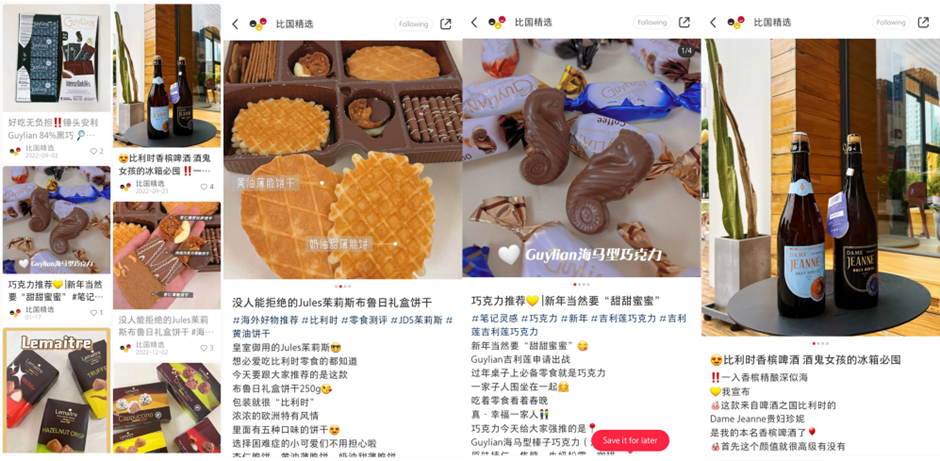
The RED account of the Belgian F&B Store
Most people in the West already heard about Alibaba and WeChat. Recently also Douyin (the Chinese Tiktok) became more well-known in the West. But have you ever heard of Xiaohongshu? Xiaohongshu was founded in Shanghai in 2013. The platform’s name means ‘little red book’ in Chinese. In English, they simply call their platform RED.
RED feels like a cross between Pinterest and Instagram, but with buying options and longer, blog-like content. In RED, a post can have up to 9 pictures and 1,000 characters. Considering that in written Chinese most words consist of just 1 or 2 Chinese characters, you can tell quite a story within those limits. Readers can ‘like’ posts, post comments, and share content with others on other platforms (e.g., Weibo and WeChat). RED does not want users to ‘spam’ each other on its platform and lets its algorithm determine which content is of interest to individual users. Also noteworthy is the feature that enables users to collect others’ posts and save them for future use, comparable to Pinterest’s ‘boards.’
After RED launched in 2013, it grew very slowly compared to other Chinese apps. Initially, the social platform was a community where consumers, especially young females, shared their experiences with foreign (luxury) products and tourist destinations. Users of RED read fellow users’ reviews or follow Key Opinion Leaders (KOLs, China’s term for influencers) who promote products. In a society where peer reviews on social media and social networks inspire more trust than other forms of product information, RED quickly became a highly regarded platform.
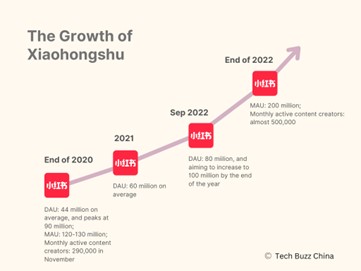
It’s only in recent years that its growth has accelerated. By the end of 2022, RED had 200 million monthly active users, including almost half a million monthly active content creators, an increase from 290,000 in November 2020. The platform’s monetization through e-commerce has been limited, but it has implemented new advertising formats to grow its business with brands and merchants.
Brands can open their own official brand accounts and use them to build brand awareness and sell products. With a brand account, they can also respond to existing posts and discussions on the platform and thus participate in the conversations of (potential) customers.
On top of this, RED also regularly organizes sales campaigns, flash sales with temporarily available offers, and other promotions in which brands can participate for a fee. Like most e-commerce platforms, RED has a series of unique shopping festivals throughout the year. It also piggybacks on Alibaba’s 11-11 (Singles Day) festival.
With the explosion of short video use in China in the second half of the last decade, it was not surprising that short videos also gained a prominent role on RED. In the summer of 2019, RED started experimenting with livestreaming, rolling it out in November of that year.
For more information about Xiaohongshu, you can read the full article on Tech Buzz China at the following link. You may also contact Horsten and MyChinaWeb how RED could benefit your business in China.

Geïnteresseerd in onze diensten?
We zijn beschikbaar voor je vragen. Je kan ons ook contacteren voor een gratis consultatiegesprek van één uur.
Contacteer ons