
Call for a more pragmatic European approach towards China
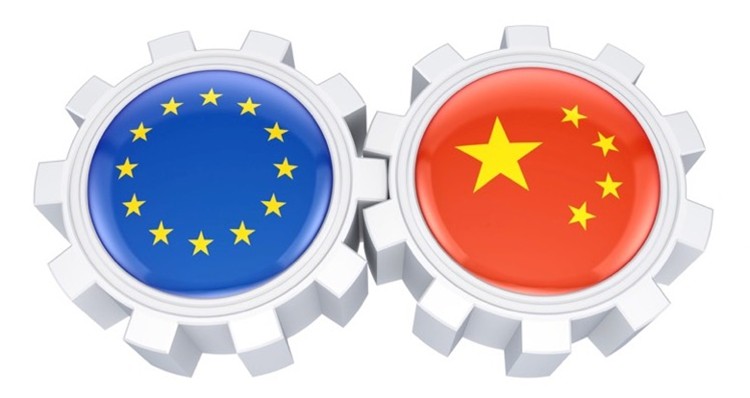
With President Trump in office, the intensifying rivalry between the United States and China is poised to significantly influence Europe’s relations with China. This article explores how Europe can navigate these shifting dynamics and assert its role and identity in a redefined global landscape.
Trump’s “America First” policy could further weaken the transatlantic alliance and force the EU to accelerate its strategic autonomy process. If the U.S. puts pressure on Europe in the areas of trade and security (e.g., by threatening to withdraw from NATO and imposing steel and aluminum tariffs), the EU will face greater pressure to balance between China and the U.S. and may seek to hedge its risks by cooperating with China in specific areas.
If Trump restarts the trade war or technological decoupling with China, he may force the EU to choose sides. However, the EU is likely to avoid turning to the United States completely, especially driven by economic interests (such as the market share of China’s new energy vehicles and photovoltaic industries), but it may cooperate with the United States in the field of security to block China’s technology (such as chip export restrictions).
Potential Opportunities for Sino-European Cooperation
As the global economy faces an era of profound transformation, driven by geopolitical shifts and the protectionist policies emerging from Washington under President Trump, it is crucial for the European Union to approach its relationship with China through the lens of economic pragmatism and look for cooperation on multilateral issues between Europe and China. This approach is not only essential for safeguarding Europe’s own economic interests but also for ensuring a stable and balanced global trading system.
Let us look at this from different perspectives:
- Trade & Investment: If the US imposes tariffs on Europe, China and Europe may accelerate the resumption of negotiations on the China-EU Comprehensive Agreement on Investment (CAI), especially to deepen cooperation in the areas of green energy and digital economy.
- Supply chain restructuring: The EU’s “de-risking” policy may shift to more pragmatic industrial chain cooperation, such as establishing controlled dependence on Chinese companies in key areas such as rare earths and battery materials.
- Climate change: after Trump’s withdrawal from the Paris Agreement, China and Europe may restart climate dialogue, but the depth of cooperation is limited by the EU’s pressure on China’s “climate responsibility”.
- Cooperation in the Global South: The two sides may form a competitive partnership for infrastructure investments in developing countries (e.g., African ports, Southeast Asian power grids).
Managing risks, embracing opportunities
Obviously, there are also possible points of divergence or friction between China and Europe, as well as many geopolitical, economic and socio-cultural challenges, but in an increasingly multipolar world, Europe cannot afford to be drawn into a zero-sum game of economic nationalism or great power rivalry. Instead, the EU must adopt a pragmatic approach that prioritizes its own economic well-being while promoting multilateralism and global stability.
Trump’s return may push China-EU relations into a “de-romanticization” phase: while both sides maintain their economic ties, security and technological competition will become more visible. The EU’s demand for “strategic autonomy” may lead it to adopt a “dynamic balance” between China and the U.S., while China will need to be precise between polarizing Europe and the U.S. and avoiding isolation.
As the U.S. shifts toward protectionism under President Trump, Europe should seize the opportunity to strengthen its economic ties with China, ensuring that this relationship is guided by mutual respect, fairness, and shared prosperity. By doing so, the EU can carve out a leading role in the global economy, promoting open trade, innovation, and sustainable growth in the 21st century.
Ultimately, China-EU relations may take on a complex form of “economic coexistence, technological competition, and geopolitical exploration”, becoming a microcosm of the global order’s transition period.
As an experienced consulting firm with a strong presence in both Belgium and China, Horsten International is ideally positioned to facilitate successful partnerships between European and Chinese businesses, helping them navigate the complexities of international cooperation and achieve mutually beneficial growth.

Interested in our services?
We are always available to answer any questions you may have. Or interested in a one-hour free consultation?
Contact us