
The legendary life of Belgian orphan Paul Splingaerd
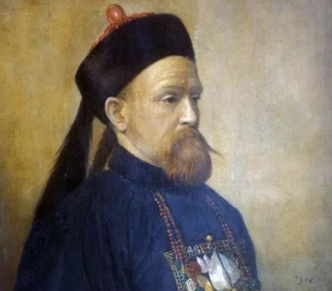
It is commonly believed that foreigners could never hold official positions in imperial China. However, history offers an exception in the case of Paul Splingaerd, a Belgian who rose to become a high-ranking official during the late Qing Dynasty. Known in China as Lin Fuchen (林辅臣) and often referred to as “the Belgian Marco Polo,” Splingaerd’s remarkable journey witnessed his rise from an orphaned child to a respected official in the Qing government.
China and Belgium formally established diplomatic relations in the early 20th century and their historical connections even stretch back much further. Please check our article about the historical testimony of Sino-Belgian Friendship at the following link.
A humble beginning in Belgium
Born in 1842 in a small village near Brussels, Splingaerd’s early life was shaped by adversity. Abandoned as a baby, he was raised in a Catholic orphanage before being adopted by the Després family in Ottenburg. Growing up in a time of economic hardship, he, like many others, faced limited opportunities for education or social mobility.
At the age of 21, while serving in the Belgian military, Splingaerd met Father Théophile Verbist, the head of a missionary organization aiding orphans. Impressed by Splingaerd’s intelligence and dedication, Verbist invited him to join a missionary expedition to China in 1865. This journey would set the course for his extraordinary life.
A new path in China
Shortly after arriving in China, Father Verbist passed away. Splingaerd decided to leave the mission and pursue his own path. With the help of German contacts, he found work as a guide and interpreter for Ferdinand von Richthofen, a prominent German geologist. During this time, Splingaerd immersed himself in Chinese culture and language, gaining a deep understanding of the society around him.
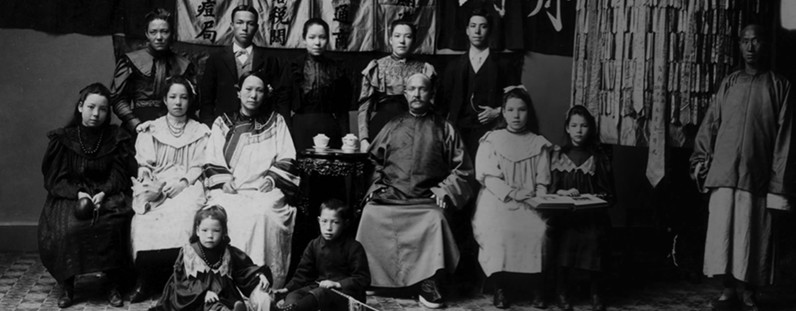
From 1872 to 1881, he managed a fur trading business in Mongolia on behalf of European companies. Known for his fairness and integrity, he built a reputation as a trusted and respected figure. In 1873, Splingaerd married a Chinese woman in Zhangjiakou. Together, they raised a large family of 12 children, creating a home that blended European and Chinese traditions.
Becoming a Qing official
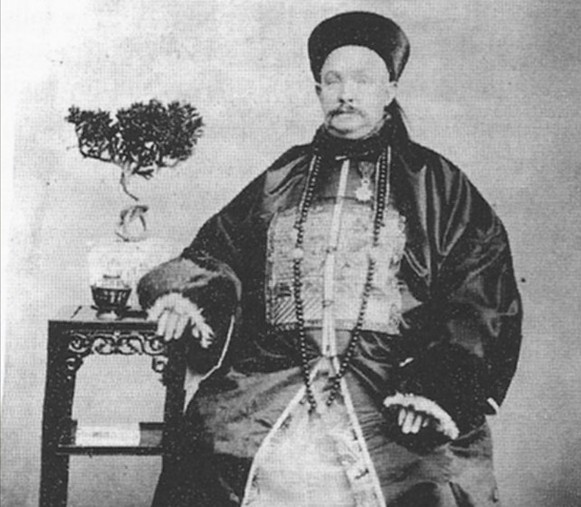
In 1882, Splingaerd was appointed by the Qing government as the first customs officer in Suzhou (modern-day Jiuquan, Gansu Province), an important trade hub in the west of Gansu. Recommended for the position by the influential statesman Li Hongzhang, Splingaerd faced the challenge of improving tax collection in a region where enforcement was very difficult.
Over 14 years, he transformed the customs office into an efficient operation, earning praise for his management skills. But his contributions went beyond taxation—he worked to improve public health by organizing smallpox vaccinations for children and providing medical care for the sick. His dedication earned him the respect of both the Qing authorities and the local population.
A legacy of connection
After retiring, Splingaerd remained committed to fostering cooperation between Belgium and China. He played a key role in revising the contract for the Hankou Railway and worked on negotiations for constructing the first metal bridge across the Yellow River in Lanzhou. These efforts underscored his lifelong commitment to bridging cultural and political divides.
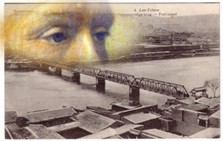
Paul Splingaerd passed away in Xi’an in 1906, but his legacy endures as a testament to the power of mutual respect and understanding.

Interested in our services?
We are always available to answer any questions you may have. Or interested in a one-hour free consultation?
Contact us